
Increase Progesterone Naturally — What Doctors Miss
How to Increase Progesterone Naturally: The Complete 2026 Guide
By Asmae | Women’s Wellness Writer & Hormonal Health Specialist at WellnessSparkles.com
⚠️ Medical Disclaimer: This article is for informational purposes only and does not replace professional medical advice. If you are experiencing severe hormonal symptoms, please consult a qualified healthcare provider.
To increase progesterone naturally, your body needs three things simultaneously: the specific enzymatic cofactors that power hormone synthesis inside the ovary — primarily Vitamin C (750 mg daily), magnesium glycinate, Vitamin B6, and zinc — a functioning ovulation each cycle, and cortisol levels low enough to allow your hypothalamus to send the signal that starts the entire process.
Results depend on where you are in your reproductive life: younger women with stress-suppressed cycles respond within one to two cycles, while women in the perimenopausal window (35–50) face structural follicular changes that require a longer, more layered approach. Use the supplement table, progesterone ranges chart, and protocol below to build your complete plan — and to have a far more informed conversation with your provider.
Quick Facts — Low Progesterone & Natural Solutions (2026)
| Women with Suboptimal Luteal Progesterone | Most At-Risk Age Group | Minimum Time to See Results | Highest-Evidence Natural Intervention |
|---|---|---|---|
| ~31% of ovulatory cycles show subclinical low progesterone despite normal cycle length | 35–50 — perimenopausal transition, accelerated follicular depletion | 2–3 full menstrual cycles (60–90 days) | Vitamin C 750 mg/day — raises serum progesterone measurably in women with luteal phase deficiency |
Why can’t you get progesterone directly from food?
No food on earth contains human progesterone. Your body manufactures this hormone exclusively inside the corpus luteum — the temporary endocrine gland that forms after ovulation — using cholesterol as its raw material. Every natural dietary strategy therefore works by delivering the specific enzymatic cofactors that power this internal production process, not by supplying the hormone itself.
This is the single most important distinction to understand before starting any protocol. Progesterone synthesis requires three sequential biochemical steps inside the corpus luteum: the StAR protein transports cholesterol across the mitochondrial membrane, the enzyme P450scc converts it into pregnenolone, and then 3β-HSD converts pregnenolone into active progesterone. Each of these steps depends on specific micronutrients — and the entire cascade shuts down when chronic stress suppresses ovulation. Your two non-negotiable targets are always: (1) feeding the ovary’s enzymatic machinery, and (2) protecting ovulation from stress-driven suppression.
Your first action: Before spending anything on supplements, confirm you are actually ovulating each cycle. Without ovulation, there is no corpus luteum, and no amount of Vitamin C or Vitex produces a single unit of progesterone. Track ovulation using LH surge strips for two to three consecutive cycles.
What actually happens to progesterone when you are chronically stressed?
Chronic stress elevates cortisol and Corticotropin-Releasing Hormone (CRH), which directly suppress GnRH pulsatility in the hypothalamus. This top-down neurological suppression shuts down the entire HPO axis — halting LH secretion, preventing ovulation, and eliminating the corpus luteum before it ever forms. The result is progesterone output at near-zero for that entire cycle.
What most wellness blogs get wrong — and the updated science: For years, the dominant alternative medicine narrative claimed that chronic stress “steals” the shared precursor molecule pregnenolone away from progesterone synthesis and forces it toward cortisol production — the so-called “Pregnenolone Steal.” Recent endocrinological consensus (2024–2026) has thoroughly debunked this model.
The actual mechanism is entirely upstream: elevated cortisol suppresses the hypothalamus directly, halting GnRH pulses and preventing the LH surge that triggers ovulation. Your body does not chemically steal progesterone’s building block — it simply never sends the signal to make progesterone in the first place. This distinction matters enormously because it shifts the intervention target from “take more progesterone precursors” to “restore the signal” — making genuine stress management a biological prerequisite, not a soft lifestyle suggestion.
Women with high-demand careers, chronic sleep debt, or intense exercise loads are acutely vulnerable. The hypothalamus interprets physical stress — undereating, overtraining, sleep deprivation — exactly as it interprets psychological stress. Even a modest chronic caloric deficit can suppress GnRH pulsatility enough to shorten or eliminate the luteal phase.
Your action: For the next four weeks, track your sleep (target 7–9 hours), caloric intake (no significant deficit), and weekly exercise load. These foundations must be in place before supplements produce meaningful results.
Which supplements raise progesterone most effectively?
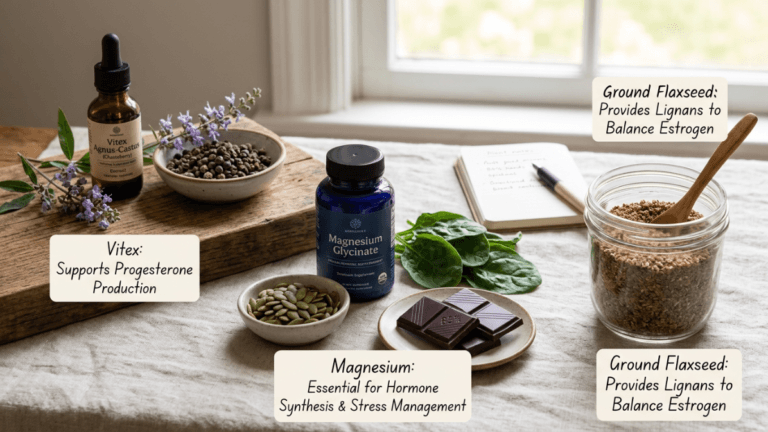
Eight supplements have credible clinical evidence supporting progesterone synthesis or the prevention of anovulation. Vitamin C at 750 mg daily is the most directly studied, with research confirming it raises serum progesterone measurably in women with luteal phase deficiency. Vitex agnus-castus reduces excess prolactin that suppresses ovulation, while magnesium glycinate lowers cortisol output and supports hepatic estrogen clearance.
| Supplement | Exact Dose | Evidence Level | How It Works | Time to Results | Key Caution |
|---|---|---|---|---|---|
| Vitamin C (Ascorbic Acid) | 750 mg/day | Strong | Potent antioxidant inside the corpus luteum; neutralizes oxidative stress during steroidogenesis; raises serum progesterone in LPD | 2–3 cycles | Very high doses cause GI upset |
| Vitex Agnus-Castus (Chasteberry) | 400–800 mg/day | Moderate–Strong | Binds dopamine D2 receptors in pituitary; reduces excess prolactin; strengthens ovulation and corpus luteum formation | 3–6 months | Contraindicated in pregnancy and IVF stimulation |
| Magnesium Glycinate | 200–400 mg/day | Moderate | Cofactor for HPA axis regulation and COMT liver enzyme; lowers cortisol; clears excess estrogen | 1–2 cycles | Use glycinate form — oxide/citrate cause diarrhea |
| Vitamin B6 (Pyridoxine) | 50–100 mg/day | Moderate | Supports corpus luteum development; cofactor for GABA synthesis — directly counters luteal anxiety | 1–3 cycles | Do not exceed 200 mg/day long-term (peripheral neuropathy risk) |
| Ashwagandha Root Extract | 300–600 mg/day | Moderate | Lowers HPA axis hyperactivation; a 2025 RCT confirmed it raises serum progesterone and estradiol significantly in 56 days | ~8 weeks | Interacts with thyroid medications and immunosuppressants |
| Zinc | 15–30 mg/day | Moderate | Enhances pituitary FSH/LH release; supports follicle maturation — prerequisite for a functional corpus luteum | 2–3 cycles | Balance with copper for long-term supplementation |
| Omega-3 Fatty Acids (EPA/DHA) | 1,000–2,000 mg/day | Moderate | Improves follicular lipid integrity; reduces intra-ovarian inflammation; supports sustained luteal hormone output | 2–3 cycles | Caution with anticoagulant medications |
| Maca Root | 1,000 mg three times daily | Preliminary | Nourishes the hypothalamic-pituitary axis; stabilizes gonadotropin release; contains zero plant hormones | 12 weeks | Quality highly variable; avoid late in the day |
Your action: Start with the highest-evidence tier: Vitamin C (750 mg with breakfast), magnesium glycinate (300 mg at bedtime), and Vitamin B6 (50 mg with breakfast). Add Vitex only after ruling out pregnancy and consulting your provider — it is contraindicated during IVF.
What foods actually support progesterone production?
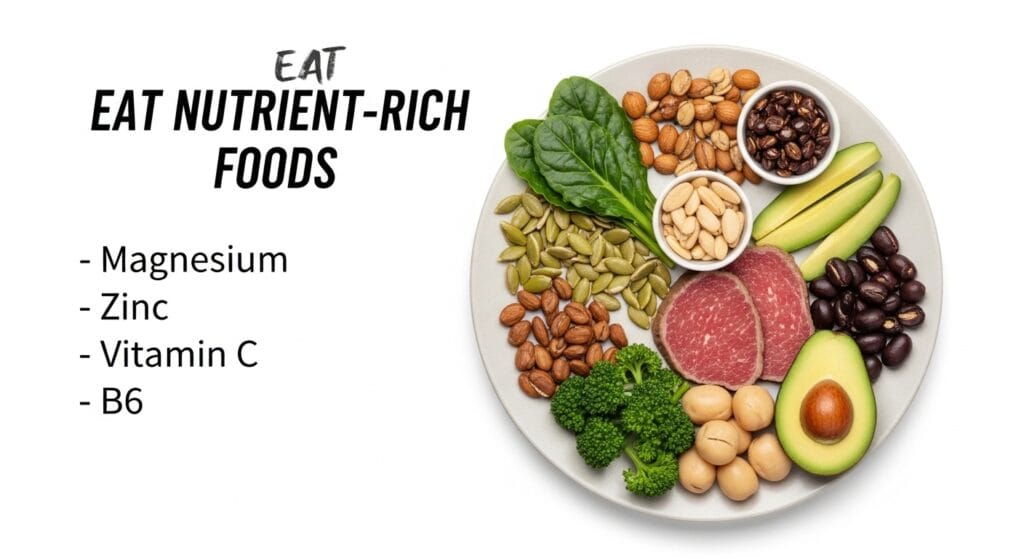
The foods that support progesterone production deliver the four critical cofactors — Vitamin B6, Vitamin C, zinc, and magnesium — alongside the cholesterol backbone that all steroid hormones require. A diet severely restricted in healthy fats directly starves the steroidogenesis pathway, because progesterone, like every steroid hormone, is synthesized from cholesterol.
Foods to prioritize daily:
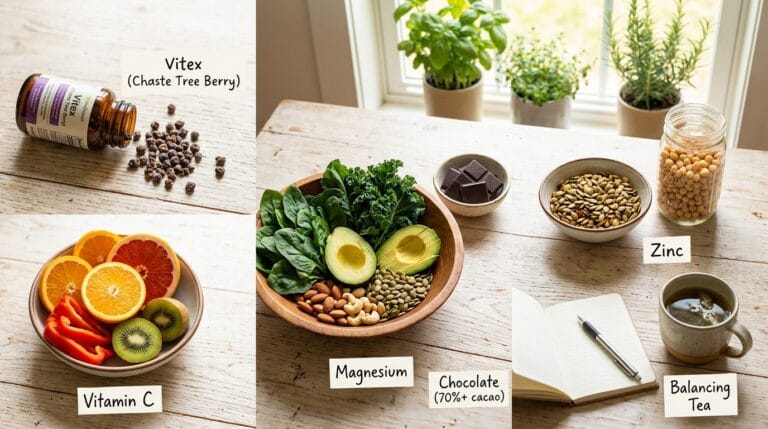
- Vitamin C: Yellow bell peppers, kiwi, strawberries, broccoli, camu camu berry powder
- Vitamin B6: Pasture-raised turkey and chicken, wild-caught salmon, chickpeas, walnuts, carrots
- Zinc: Oysters, wild-caught crab, pumpkin seeds, dark chocolate
- Magnesium: Spinach, Swiss chard, almonds, black beans
- Cholesterol substrate (healthy fats): Avocados, extra virgin olive oil, pasture-raised egg yolks
Foods to reduce significantly:
- Refined sugars and high-glycemic carbohydrates — white bread, pastries, and sweetened beverages cause hyperinsulinemia, which overstimulates ovarian androgen production, arrests follicle maturation, and directly prevents ovulation
- Excess caffeine and alcohol — both elevate cortisol, suppress GnRH pulsatility, and burden the liver’s cytochrome P450 detoxification pathways, impairing estrogen clearance and driving estrogen dominance
The Mediterranean dietary pattern — high in omega-3 fatty acids, plant fibre, and low-glycemic whole foods — is the most clinically validated protocol for supporting robust luteal function. High dietary fibre binds to estrogen metabolites in the gut, preventing their reabsorption into the bloodstream and preserving the progesterone-to-estrogen ratio your body needs to function normally.
Your action: Add one zinc-rich food and one Vitamin C-rich food to every main meal this week. These two nutrients alone address the most common dietary gaps in women with low luteal progesterone.
How do you test progesterone levels accurately?
A single blood draw on “Day 21” is frequently misleading — and most doctors don’t explain why. Progesterone is secreted in pulsatile bursts synchronized with LH pulses from the pituitary, meaning serum levels fluctuate up to eightfold within a single 90-minute window. A blood draw at a trough shows 4 ng/mL; drawn 90 minutes later from the same woman in the same morning, it shows 18 ng/mL. A single static blood test tells you relatively little about your true luteal output.
There is also a critical gap between what conventional labs define as “normal” and what functional medicine identifies as “optimal” — and this gap directly explains why so many women suffer real symptoms while being told their labs are “fine.”
| Cycle Phase | Conventional ‘Normal’ Range | Functional Medicine Optimal | Clinical Note |
|---|---|---|---|
| Follicular Phase | < 1.0 ng/mL | < 1.0 ng/mL | Pre-ovulation baseline |
| Mid-Luteal Peak | 2.6 – 21.5 ng/mL | 10.0 – 20.0 ng/mL (ideally > 15) | Key diagnostic window — drawn 7 days post-ovulation |
| First Trimester Pregnancy | 11.2 – 90.0 ng/mL | 20.0 – 40.0+ ng/mL | Supports implantation and early embryo |
| Postmenopausal | < 1.0 ng/mL | < 1.0 ng/mL | Baseline after menopause |
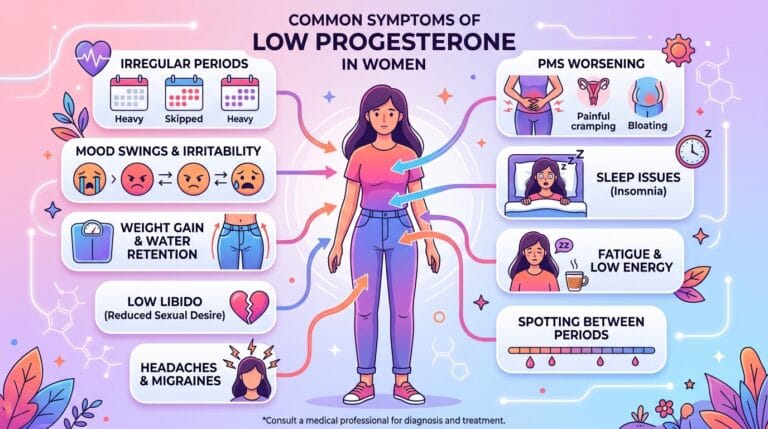
A conventional doctor accepts a luteal reading of 4.5 ng/mL as “normal” because it falls within the enormously wide reference range of 2.6–21.5 ng/mL. Functionally, levels below 10 ng/mL are often insufficient to produce adequate allopregnanolone — the calming neurosteroid progesterone converts into — leaving a woman with genuine anxiety, insomnia, and premenstrual spotting despite “normal” labs.
The most reliable at-home alternative is urinary Pregnanediol-3-Glucuronide (PdG) testing. PdG is the primary urinary metabolite of progesterone, and testing first-morning urine provides a time-averaged, stable picture of total progesterone output across several hours — far more reliable than a single serum draw. Research confirms that three consecutive urinary PdG tests showing ≥ 5 μg/mL following the LH surge confirm healthy ovulation with 82–100% specificity. Validated at-home monitors like Proov, Mira, and Inito measure PdG quantitatively.
One firm caution: both ACOG and the Endocrine Society explicitly do not recommend salivary hormone testing for progesterone. Saliva tests lack reproducibility and clinical validation and should not guide treatment decisions.
Your action: Ask your provider to draw your progesterone 7 days after confirmed ovulation — not on calendar Day 21 unless your cycle is exactly 28 days. Pair this with at-home PdG tracking across three consecutive cycles for the most complete clinical picture.
What lifestyle changes raise progesterone fastest?
Three lifestyle changes produce the fastest measurable impact on luteal progesterone: optimizing sleep architecture, correcting undereating, and reducing high-intensity exercise frequency. All three work through the same central mechanism — restoring GnRH pulsatility in the hypothalamus, restoring ovulation, and rebuilding the corpus luteum.
Sleep drives progesterone production because the pulsatile GnRH release that sets the entire hormonal cascade in motion occurs primarily during the night. Fewer than seven hours of sleep measurably disrupts LH pulsatility and shortens the luteal phase. Women who shifted from under six hours to over seven hours of nightly sleep showed improved luteal phase markers within two cycles in cohort data.
Extreme exercise is one of the most common and under-discussed causes of low progesterone in women aged 25–40. Women training at high intensity for more than 10 hours weekly — particularly distance runners and high-frequency strength athletes — consistently show shortened luteal phases and anovulatory cycles. Reducing high-intensity sessions to four per week, combined with ensuring caloric intake matches energy expenditure, resolves this in most cases within 90 days. Women working on a full lifestyle reset often find that broader and frameworks help them address these habits systematically.
In my years working with women with hormonal imbalances, the most underestimated factor is not the supplement protocol — it is sleep. I have seen women with textbook luteal phase deficiency, frustratingly unresponsive to Vitex and Vitamin C for three cycles, make measurable progress within six weeks of simply protecting eight hours of uninterrupted sleep and eating 200 calories more per day. The hypothalamus responds to safety signals — and rest and food are its most fundamental ones.
Your action: For the next full cycle, commit to three non-negotiables: 7–9 hours of sleep nightly, no caloric deficit, and maximum four high-intensity workouts per week. Track your luteal phase length — it targets 12–14 days with this foundation in place.
How does low progesterone connect to estrogen dominance and thyroid dysfunction?
Low progesterone does not operate in isolation — it triggers a cascade across the entire endocrine system. Without progesterone’s antagonistic action on estrogen receptors, estrogen is left entirely unopposed, causing endometrial proliferation, heavy bleeding, fibrocystic breast changes, and fluid retention. This state of estrogen dominance then forces the liver to increase production of Thyroid Binding Globulin (TBG), which inactivates free thyroid hormone and produces secondary subclinical hypothyroidism — worsening fatigue, weight gain, and anovulation in a self-reinforcing cycle.
Women actively working to flush out excess estrogen will find this estrogen-progesterone-thyroid triad central to their protocol, because treating any one arm in isolation consistently produces incomplete results. The insulin connection is equally critical: pathological insulin resistance, as seen in PCOS and metabolic syndrome, drives hyperinsulinemia that arrests follicle maturation and prevents ovulation entirely. In these cases, low progesterone is a downstream symptom of the insulin disorder. Addressing herbs to increase progesterone alongside metabolic support produces far better outcomes than herbal supplementation alone, and understanding cortisol affect menstrual cycle rounds out the full hormonal picture.
Your action: If you experience both low progesterone symptoms and persistent fatigue or unexplained weight gain, ask your provider to test TSH, free T3, and fasting insulin alongside mid-luteal progesterone. Missing the thyroid or insulin piece is the most common reason natural protocols fail after three to six months of consistent effort.

FAQ
How long does it take to increase progesterone naturally?
What foods are highest in progesterone?
Can stress alone cause low progesterone?
Does Vitamin D help increase progesterone?
How do I know if natural methods are working?
What is the difference between progesterone cream and prescription progesterone?
Works Cited
Works Cited
- Schliep KC, et al. (2014). Luteal phase deficiency in regularly menstruating women. PubMed/NCBI. URL: https://pmc.ncbi.nlm.nih.gov/articles/PMC4037737/
- Oliver DL (1991). The prevalence and epidemiology of luteal-phase deficiency. PubMed. URL: https://pubmed.ncbi.nlm.nih.gov/2025966/
- American Society for Reproductive Medicine (2021). Diagnosis and treatment of luteal phase deficiency: a committee opinion. ASRM. URL: https://www.asrm.org/practice-guidance/practice-committee-documents/diagnosis-and-treatment-of-luteal-phase-deciency-a-committee-opinion-2021/
- National Center for Biotechnology Information (2023). Progesterone — StatPearls. NIH. URL: https://www.ncbi.nlm.nih.gov/books/NBK558960/
- Endocrine Society (2023). Luteal Lipid Droplets and Steroid Synthesis. URL: https://www.endocrine.org/journals/endocrinology/luteal-lipid-droplets-and-steroid-synthesis
- Muhammad YA (2025). Reproductive aging and the neuroimmune transition. PubMed/NIH. URL: https://pmc.ncbi.nlm.nih.gov/articles/PMC12463648/
- Roos J, et al. (2015). Urinary pregnanediol 3-glucuronide (PdG) analysis. PubMed. URL: https://pmc.ncbi.nlm.nih.gov/articles/PMC12610767/
- Bouchard TP, et al. (2019). Evaluating a new urine PdG self-test. PubMed. URL: https://pmc.ncbi.nlm.nih.gov/articles/PMC6614355/
- Henmi H, et al. (2003). Effects of ascorbic acid supplementation on serum progesterone levels in patients with a luteal phase defect. PubMed. URL: https://pmc.ncbi.nlm.nih.gov/articles/PMC5836012/
- Vani M, et al. (2025). Efficacy and safety of Ashwagandha root extract for managing menopausal symptoms. PubMed/NIH. URL: https://pubmed.ncbi.nlm.nih.gov/41561822/
- Ganie MA, et al. (2014). Polycystic ovary syndrome and autoimmune thyroid disease. PubMed. URL: https://pmc.ncbi.nlm.nih.gov/articles/PMC4287775/
- Cleveland Clinic (2023). Low Progesterone: Symptoms, Causes & Treatment. URL: https://my.clevelandclinic.org/health/diseases/24613-low-progesterone
- NIH — StatPearls (2023). Physiology, Menstrual Cycle. URL: https://www.ncbi.nlm.nih.gov/books/NBK500020/
10 Best Herbs to Increase Progesterone Levels Naturally Without Any Medication